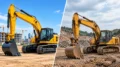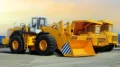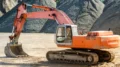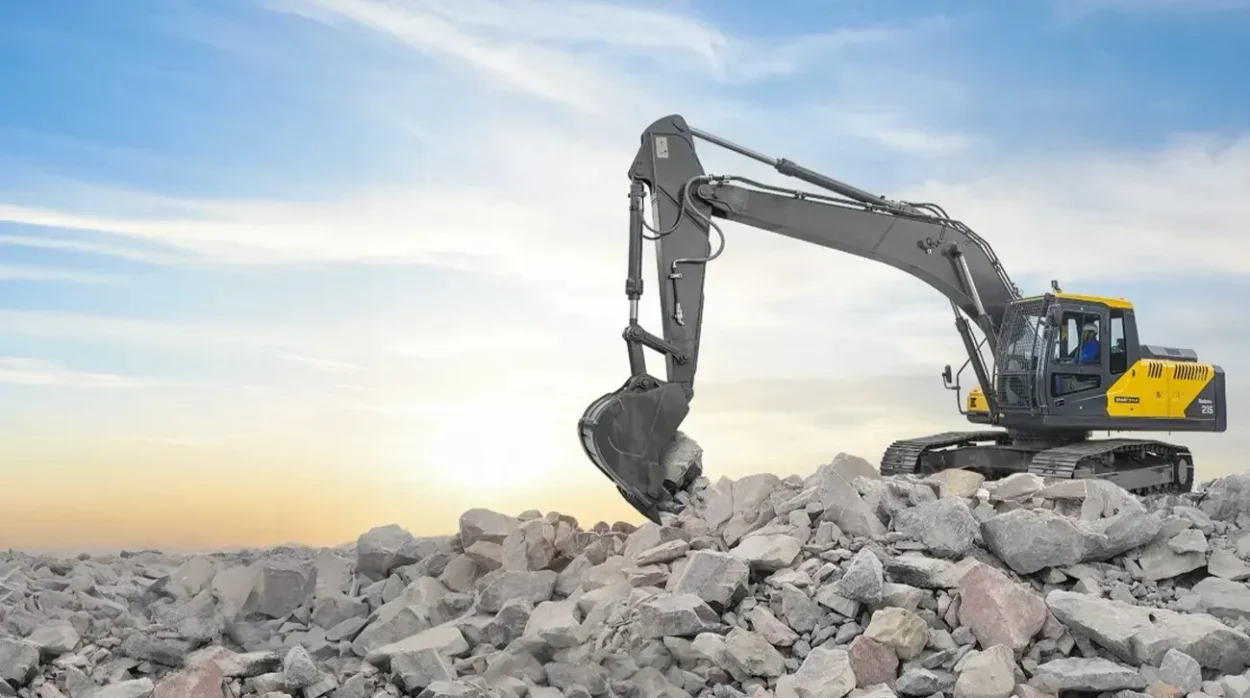
Excavators are among the most versatile machines used in construction, mining, infrastructure, agriculture, and industrial projects. However, choosing the right excavator requires more than simply selecting the largest or most powerful machine available.
The right equipment should match the project’s working conditions, material requirements, available space, productivity targets, and budget.
Understand Your Project Requirements
The first step is to clearly understand what the excavator will be expected to do.
Consider whether the machine will primarily be used for:
- Excavation
- Foundation work
- Trenching
- Road construction
- Material loading
- Mining
- Demolition
- Drainage installation
- Landscaping
- General earthmoving
Different applications require different combinations of machine size, power, reach, and attachments.
Select the Appropriate Excavator Size
Excavators are available in a wide range of sizes.
Mini Excavators
Mini excavators are useful for projects where space is limited. They are commonly used for landscaping, utility work, small foundations, and urban construction.
Their compact dimensions make them easier to maneuver in restricted areas.
Medium Excavators
Medium excavators provide a balance between mobility and digging capacity. They are suitable for many general construction, roadwork, utility, and infrastructure applications.
Large Excavators
Large excavators are designed for demanding operations requiring high digging and loading capacity.
They are commonly used in large construction projects, mining, quarrying, and major earthmoving operations.
Consider Digging Depth and Reach
The required digging depth is another important consideration.
If an excavator cannot reach the required depth, productivity may be affected and additional equipment may be needed.
Before purchasing or sourcing an excavator, check:
- Maximum digging depth
- Maximum reach
- Dump height
- Bucket capacity
- Lifting capacity
- Working radius
These specifications should be compared directly with the project’s requirements.
Think About Attachments
An excavator’s versatility depends significantly on its attachments.
Depending on the application, operators may use:
- Standard buckets
- Heavy-duty buckets
- Hydraulic breakers
- Augers
- Grapples
- Compaction attachments
- Specialized digging tools
Choosing a machine compatible with the required attachments can increase its usefulness across multiple projects.
Check Ground Conditions
Site conditions can influence excavator selection.
Soft ground may require specific undercarriage configurations, while rocky terrain may demand stronger components and heavy-duty attachments.
Projects in confined urban areas may also require compact machines with reduced tail swing.
Evaluate Fuel Efficiency
Fuel is an important part of heavy equipment operating costs.
When comparing excavators, consider both machine performance and fuel consumption. A machine with suitable capacity and efficient operation can help control long-term operating expenses.
Modern excavators may also include engine-management and monitoring technologies that support more efficient operation.
Consider Maintenance and Parts Availability
An excavator is only productive when it is operational.
Before selecting a machine, consider the availability of:
- Replacement parts
- Technical support
- Maintenance services
- Hydraulic components
- Filters and consumables
- Qualified technicians
Easy access to maintenance support can help reduce downtime.
New vs. Used Excavators
Depending on the project and budget, companies may consider either new or used equipment.
New machinery can offer the latest technology, warranties, and updated features. Used equipment may provide a more cost-effective option when properly inspected and sourced from a reliable supplier.
For either option, buyers should carefully review machine condition, operating hours, maintenance history, specifications, and documentation.
Compare Total Cost of Ownership
The purchase price is only one part of the overall cost.
Businesses should also consider:
- Fuel consumption
- Maintenance
- Spare parts
- Transportation
- Operator requirements
- Downtime
- Resale value
A machine with a higher initial price may potentially provide better long-term value if it delivers stronger productivity and lower operating costs.
Work With a Reliable Equipment Supplier
International equipment sourcing requires careful attention to product specifications, logistics, documentation, and delivery.
Working with an experienced trading company can simplify the sourcing process and help businesses identify equipment suited to their operational requirements.
SHARPEDGE GLOBAL L.L.C – FZ provides heavy equipment solutions for customers across international markets, with a focus on the Middle East, Africa, and Asia.
Conclusion
Choosing the right excavator starts with understanding the project rather than simply choosing the biggest machine.
By evaluating machine size, digging capacity, attachments, terrain, fuel efficiency, maintenance requirements, and total ownership costs, businesses can make more informed equipment decisions.
The right excavator can improve productivity, reduce operational challenges, and provide reliable performance throughout the project lifecycle.